
Loading...
Compressed and Liquefied Gas Cylinders
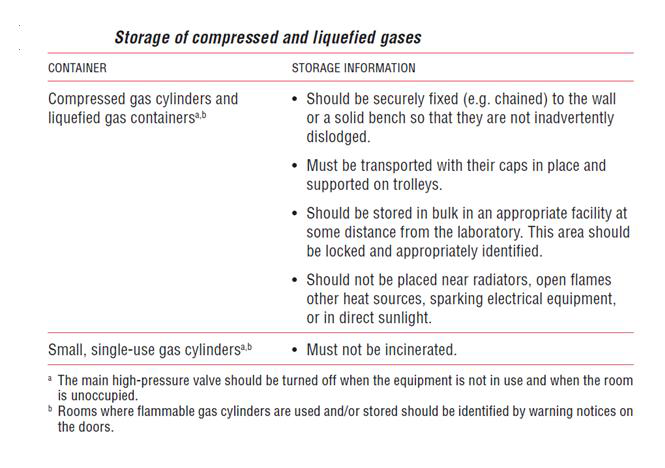
Information regarding storage of compressed and liquefied gases is given in the attached Table
Mishandling compressed gas cylinders – which can have a very high internal pressure– can be disastrous. Dropping, tipping over or exposing a cylinder to heat can cause feebleness or snaps in the cylinder’s covering, which can result in a shrapnel-laden explosion.
Storing
- Secure cylinders upright to the wall with a chain or strap in a proper cylinder cart.
- Containers should be stored with their valves uppermost.
- Cylinders should be stored preferably in the open air on a concrete or load-bearing surface. Flammable liquids, combustible, corrosive, oxidizing materials, toxic materials or compressed gas cylinders should be kept separate from LPG containers in general.
- Store cylinders at least 6 meters from inflammable materials in a dry, ventilated place.
- Keep oxygen cylinders at least 6 meters from fuel gas cylinders
Moving
The majority of incidents and injuries involving gas cylinders occur during handling or transportation. To help prevent incidents when moving cylinders
- Handle cylinders with care and avoid dropping or hitting them against anything.
- Follow proper procedures and use the right equipment, including safety glasses, heavy-duty gloves and protective footwear.
- Ensure safety measures, such as caps or guards, are securely installed.
- Use a cart or hand truck instead of dragging or rolling cylinders.
- Use proper cradles, nets or platforms if using a crane.
- Avoid lifting cylinders by their caps or guards or with magnets or slings, which can damage the valves.